Intelligent

Intelligent

Make decisions part of manufacturing. Intelligent manufacturing is not defined by automation alone, but by the ability to understand information and act on it at every critical step. Intelligence is embedded across design, production, and validation—transforming manufacturing from execution into a continuous process of decision-making and refinement. Through virtual–real integration, real-time data visibility, and precise human–machine collaboration, every action is grounded in insight. This enables a shift from experience-driven processes to systems that are predictable, controllable, and continuously improving. In this approach, intelligence is not a feature—it is the foundation for consistency, precision, and reliability.

Autonomous Intelligence

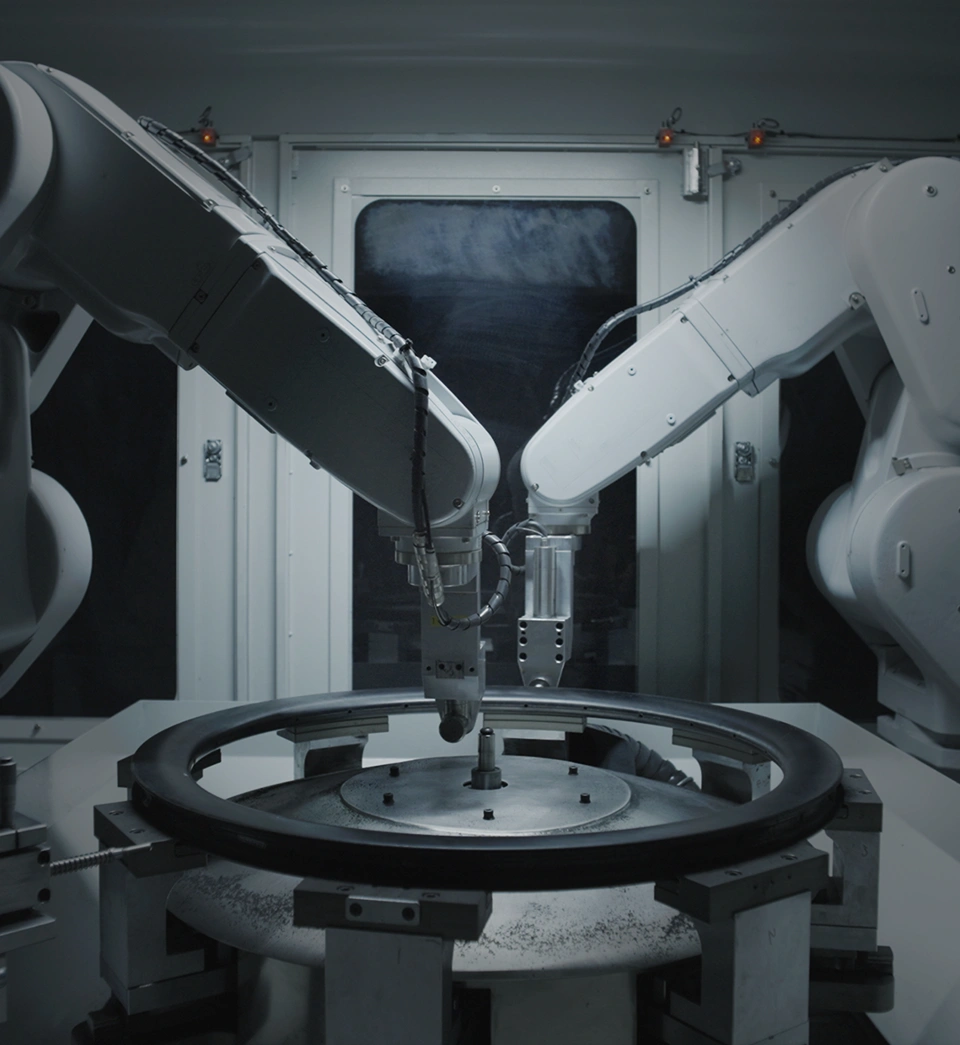
Giant Group has built over 50 years of expertise in bicycle manufacturing, forming a strong foundation for in-house R&D and effective use of technology. Guided by “management drives technology,” we monitor global trends and selectively adopt solutions that enhance quality and efficiency. We deploy 3D vision systems to enable precise robotic operations, and use proprietary AI models to interpret T4/T6 heat-treatment data, ensuring consistent material performance. With IoT-based quality tracking and SCADA integration, we achieve real-time monitoring and full-process transparency. These efforts deliver clear results: 13 processing stations have been consolidated into 3 machines, and laser cutting has reduced lead time from 1.5 days to 30 minutes. Through modular, self-developed equipment and a “Copy Exactly” approach, best practices are rapidly scaled across 9 global manufacturing sites—combining craftsmanship with digital capability to advance smart manufacturing.

Advanced Virtual–Real Optimization

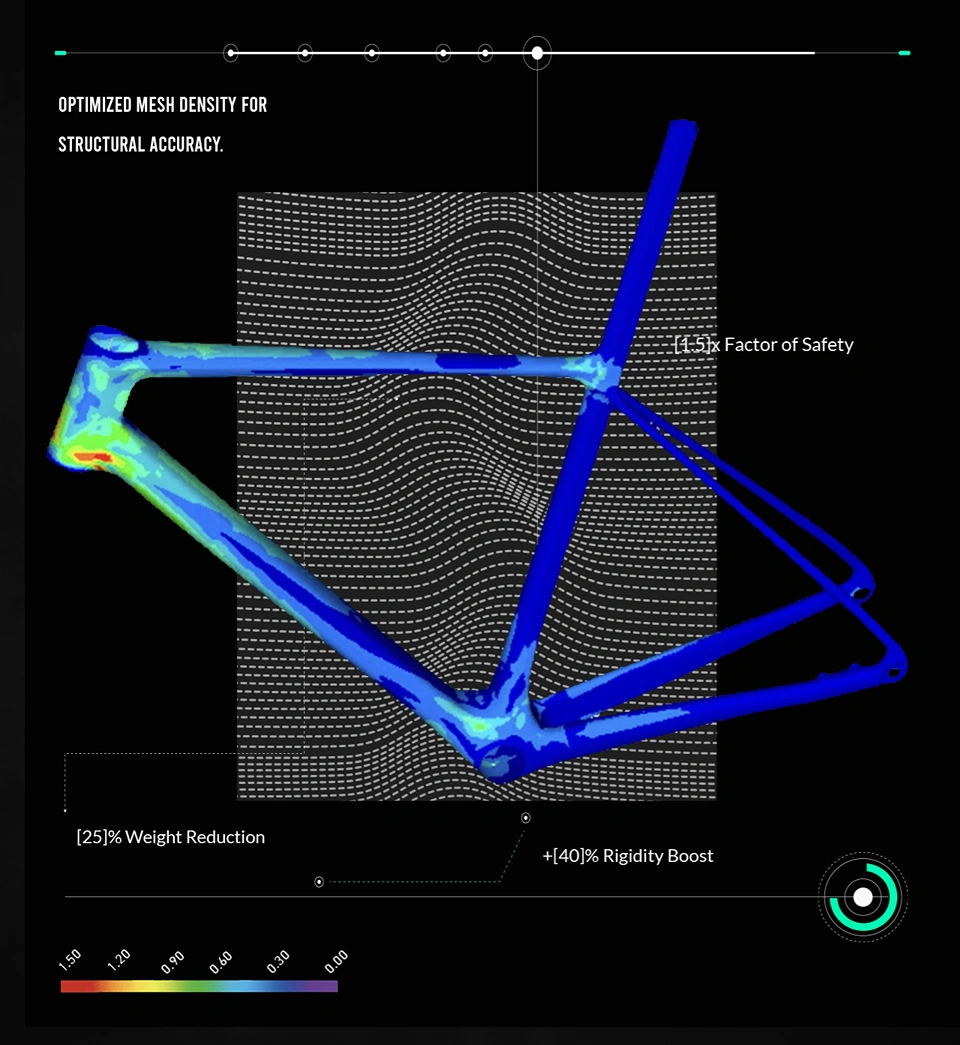
Before physical prototypes exist, digital twin technology forms the foundation of our design decisions. Through a synchronized 3P1Q framework (Pre-CAE, Pre-Layer, Pre-Manufacturing), we optimize structures in a virtual environment—precisely defining carbon fiber layup thickness and orientation to achieve weight reduction without compromising stiffness, delivering up to 30g savings at frame level. We further apply PAM-STAMP FEA to simulate metal forming, accurately predicting stress distribution and wrinkling risks. This improves die design precision and raises first-pass success rates from ~60% to nearly 95%, significantly reducing tooling iterations and cost. With our CAE virtual lab, pedaling fatigue and impact simulations for the latest TCR are completed prior to production, shortening development cycles and minimizing physical test risks. Digital twins replace trial-and-error with predictive, verifiable engineering precision.

Human–Machine Collaboration

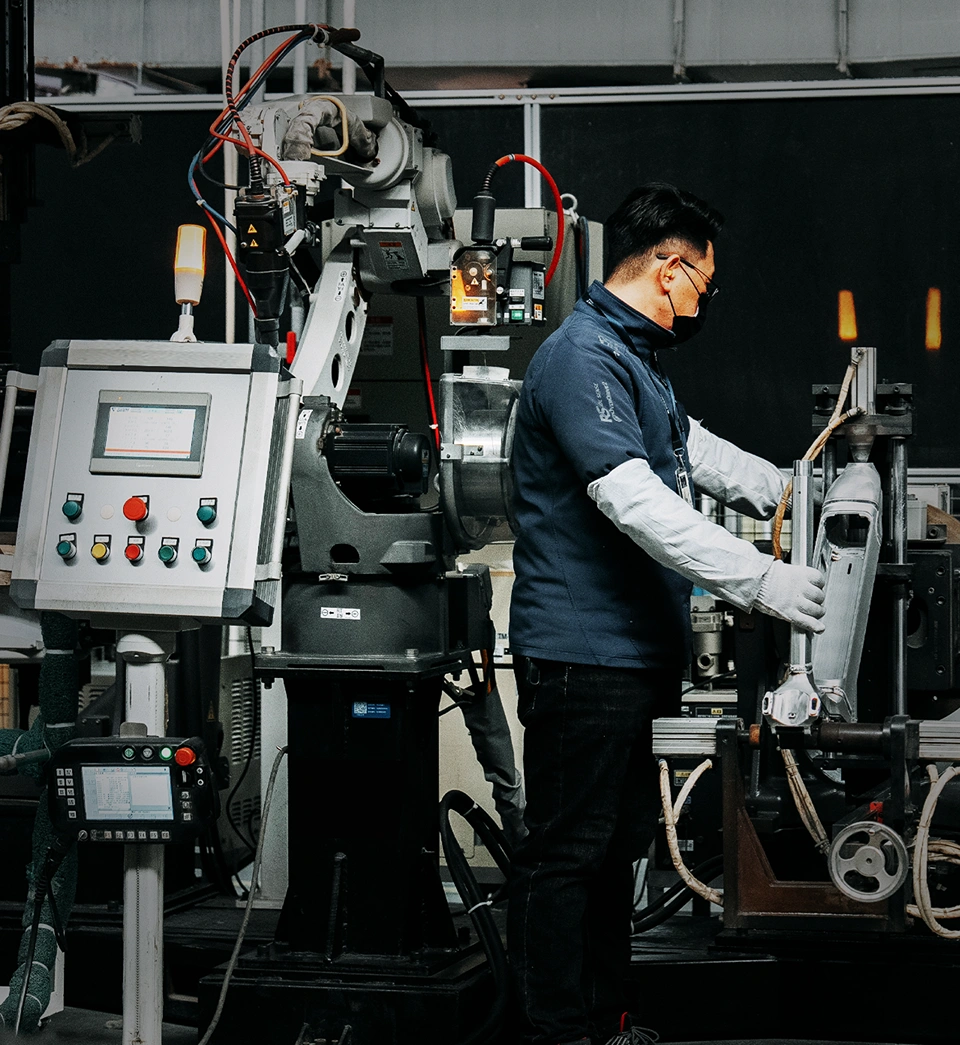
In a highly diverse, small-batch—even single-unit—manufacturing environment, we adopt a human-centered model of human–machine collaboration rather than full automation. Machines handle repetitive, high-consistency processes—such as P-stitch and Smooth Welding—ensuring stability and uniform quality. Humans focus on flexible adjustments and quality judgment, responding to varying specifications and customization needs. This enables a balance between efficiency and agility in an industry with diverse models and frequent changeovers, making collaboration a key competitive strategy. Through equipment optimization and automation, we reduced staffing at carbon fiber stations from eight to three, while maintaining rapid mold changes and model switching. This not only improves efficiency but also redefines human value—from operators to essential decision-makers.

raise the bar

Investor Relations

Better Together

Giant Group has always been a leader in the bicycle industry, our stable financials reflective of our effort. Our steady profits and stock prices allow us to stand tall in hours of challenges, helping us shape a better tomorrow for all cyclists.