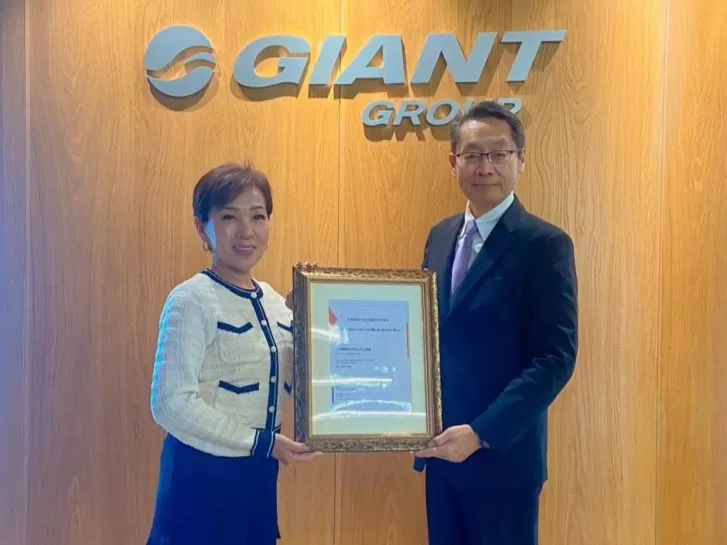
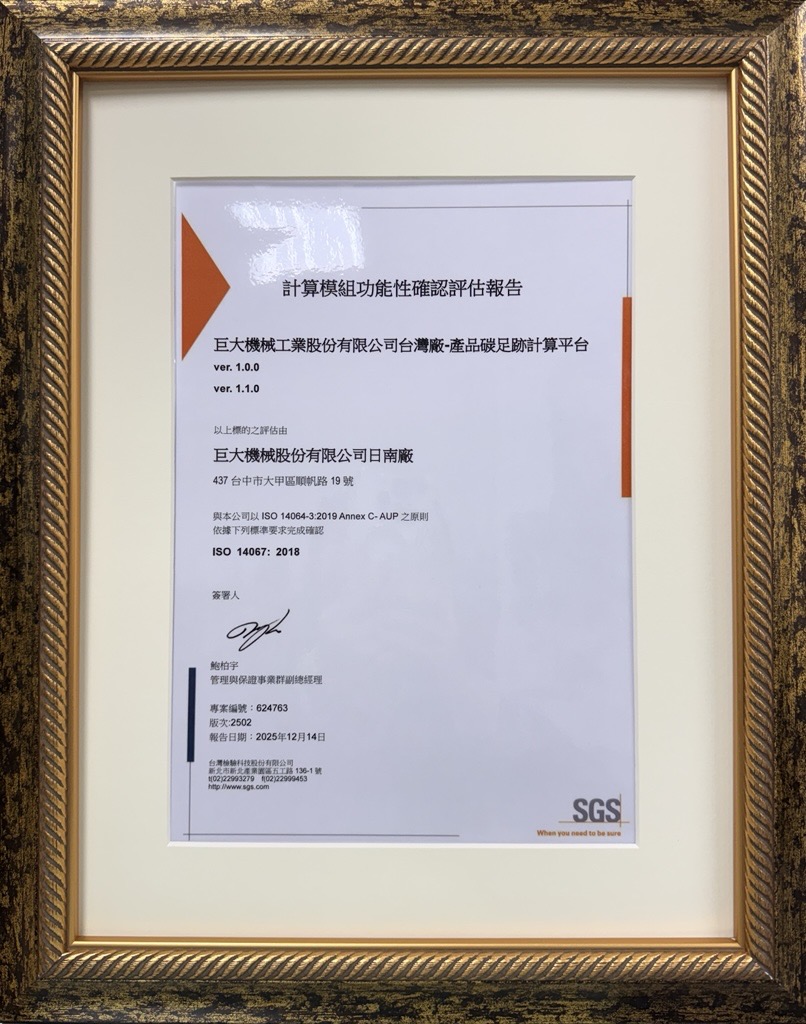
Giant Group today announced its latest progress in the field of sustainable operations, achieving a major milestone on the path of low-carbon transformation. Giant Group's Taiwan manufacturing has officially completed its self-developed "Product Carbon Footprint Calculation Platform," which successfully passed the Agreed-Upon Procedures (AUP) verification by the third-party certification body SGS. This platform was developed in accordance with international standards such as ISO 14067, ISO 14040, and ISO 14044, demonstrating Giant Group's transparency and credibility in data governance.
Overcoming Digital Transformation Bottlenecks, Solving Traditional Manual Assessment Pain Points
Since 2020, Giant Group has proactively conducted Product Carbon Footprint (PCF) assessments for six of its representative bicycle models. Through the "Life Cycle Assessment (LCA)" method, it conducted in-depth examinations of five key stages: 1) Materials Acquisition, 2) Manufacturing, 3) Transportation and Distribution, 4) Product Usage, and 5) Disposal.
During the assessment process, it was discovered that traditional manual processing modes often faced multiple challenges. Due to data being scattered across different departments and factories, there was a high reliance on Excel consolidation and external consultants in the past. This not only took several months but also made it difficult to link data in real-time, resulting in decision-makers being unable to immediately grasp the status of product life cycle carbon emissions, forming "information silos."
To bridge this bottleneck, Giant Group built a digital platform to transform complex data into manageable corporate decision-making tools. The platform possesses large-scale calculation capabilities, significantly shortening the original months-long Life Cycle Assessment (LCA) operations to a few days or even hours, markedly improving data timeliness and decision-making precision.
Precision Identification of Carbon Hotspots, Implementing Carbon Reduction from the Design Source
In addition, through Product Carbon Footprint (PCF) assessments, it was also found that environmental impacts in the bicycle life cycle are mainly concentrated in the "Materials Acquisition" and "Manufacturing" stages. Components such as frame parts, tires, and manufacturing energy usage were identified as key carbon reduction hotspots.
Using data generated by this platform, Giant Group integrates analysis results into product design decisions, introducing environment-friendly materials and innovative manufacturing processes from the design source. This not only strengthens internal governance but also establishes a proprietary Product Life Cycle Assessment (LCA) database for the group.
Four Core Competencies of the Digital Platform
This verified platform integrates material and energy management systems, demonstrating four major data governance advantages:
1. Real-time Database: Establishing a carbon emission factor library for raw materials and components to support development teams in mastering optimal material combinations at the early design stage.
2. Automated System Allocation: Automatically applying allocation principles based on energy and resource inputs in the manufacturing stage, significantly improving calculation accuracy.
3. Highly Transparent Inventory: Providing real-time queries for target product carbon emissions and transparently displaying all activity data.
4. Deep Hotspot Analysis: Identifying high-emission links to provide data support for subsequent carbon reduction strategies.
Future Application, Deepening Carbon Reduction Path Simulation
Looking forward, Giant Group will continue to optimize the application levels of this platform. In addition to implementing internal carbon audits according to international standards (ISO 14064, ISO 14067), the data analysis results will serve as the foundation for "Carbon Reduction Path Simulation"—allowing R&D personnel to simulate carbon footprint changes after material substitutions during the development stage, thereby achieving the long-term goal of low-carbon product development.
Giant Group expects to drive value chain partners toward low-carbon transformation through a dual-track model of data-driven innovation and industry collaboration, providing global consumers with more environmentally friendly and higher-quality mobility solutions to safeguard the sustainable future of the Earth.